Data and Voice Networks: पूरी जानकारी
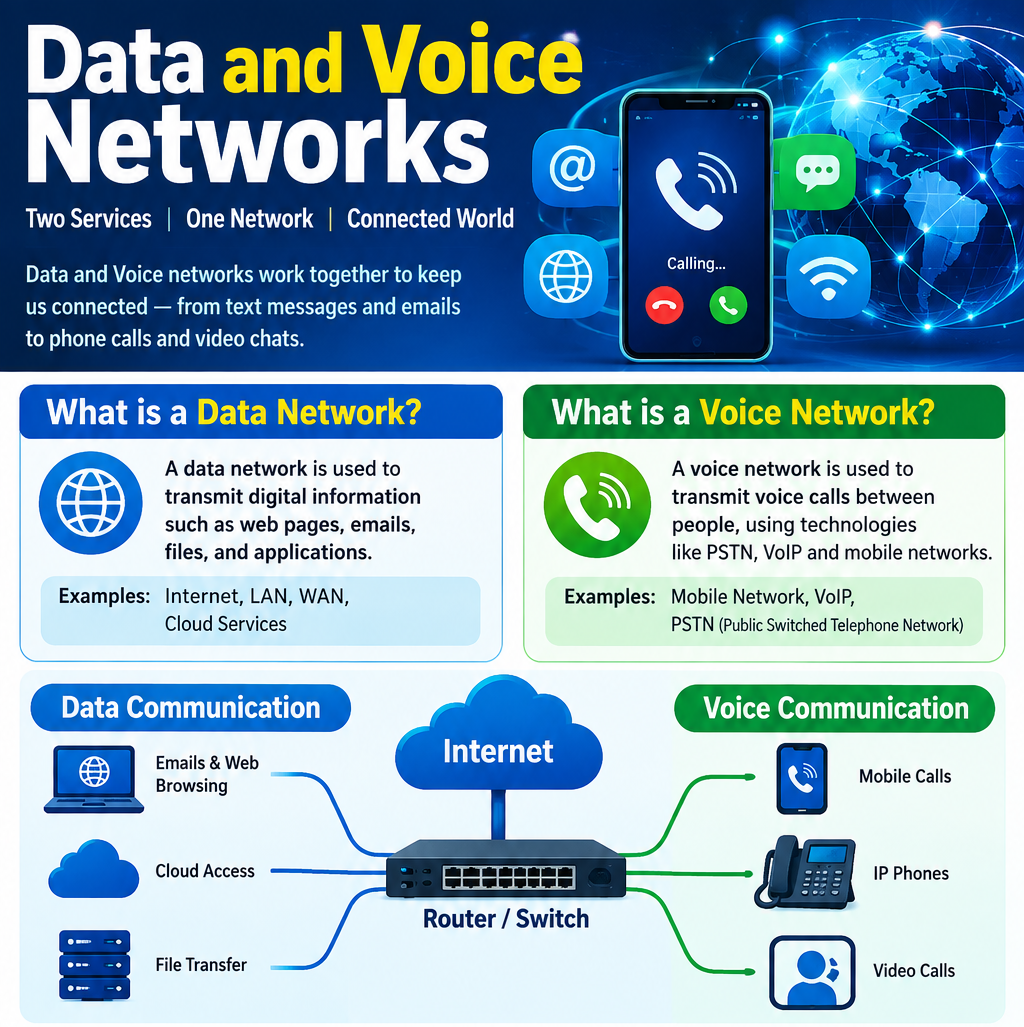
आज के समय में communication सिर्फ phone call तक सीमित नहीं है। हम एक ही network infrastructure का इस्तेमाल internet browsing, file sharing, video conferencing, online applications और voice calling जैसी अलग-अलग services के लिए करते हैं। इसी वजह से networking को समझते समय Data Network और Voice Network दोनों को समझना बहुत जरूरी है।
पहले data और voice communication के लिए अलग-अलग infrastructure इस्तेमाल किया जाता था। Telephone के लिए traditional PSTN (Public Switched Telephone Network) और computer communication के लिए अलग data networks होते थे। लेकिन modern networking में IP-based networks ने दोनों technologies के बीच की दूरी काफी कम कर दी है।
आज VoIP (Voice over Internet Protocol) की मदद से voice को भी data packets में convert करके IP network के माध्यम से transmit किया जा सकता है।
Data Network क्या है?
Data Network ऐसा network है जिसका मुख्य उद्देश्य computers, servers, switches, routers और अन्य network devices के बीच digital data को transfer करना होता है।
जब हम कोई website open करते हैं, email भेजते हैं, file download करते हैं या server से कोई application access करते हैं, तो data network काम करता है।
Data network में information छोटे-छोटे packets में divide होकर network पर travel करती है। प्रत्येक packet में source और destination से संबंधित addressing information होती है।
उदाहरण के लिए, अगर कोई user अपने computer से किसी server पर stored file access करता है, तो computer उस request को packets में भेजता है। Network devices उन packets को appropriate destination तक पहुंचाते हैं।
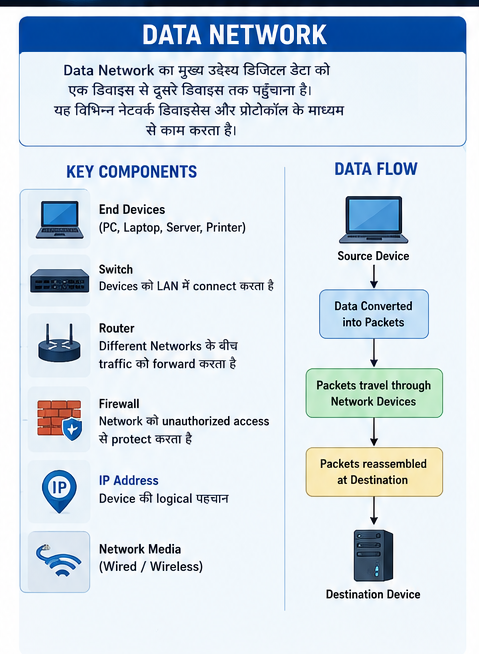
Data Network के मुख्य components
एक सामान्य data network में कई components शामिल हो सकते हैं:
- End Devices: PC, laptop, printer, server
- Switch: LAN के अंदर devices को connect करता है
- Router: अलग-अलग networks के बीच traffic forward करता है
- Firewall: Network traffic को security policies के आधार पर control करता है
- Access Point: Wireless devices को network से connect करता है
- Network Cable: Wired communication के लिए medium
- IP Address: Device की logical identification
- MAC Address: Network interface की physical identification
Voice Network क्या है?
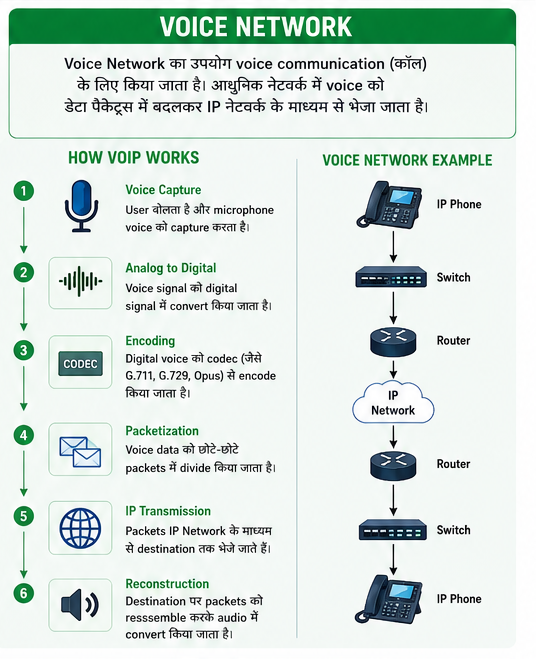
Voice Network ऐसा communication network है जिसका उपयोग voice communication यानी telephone calls के लिए किया जाता है।
Traditional telephone networks में voice signal को circuit-based communication के माध्यम से transmit किया जाता था। लेकिन modern networks में voice communication increasingly IP technology पर आधारित हो गया है।
जब voice को IP network के माध्यम से भेजा जाता है, तो इसे VoIP कहा जाता है।
VoIP में व्यक्ति की आवाज को पहले electrical/digital signal में convert किया जाता है। इसके बाद voice को छोटे packets में encode करके IP network पर भेजा जाता है।
दूसरे end पर packets को receive करके फिर से audio में convert किया जाता है।
Data Network और Voice Network में अंतर
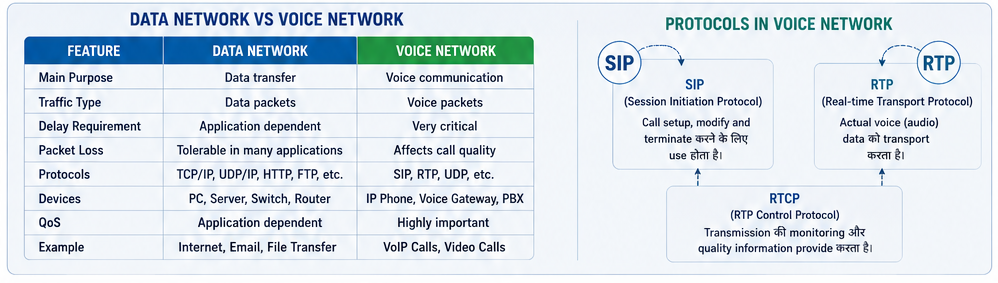
Data और voice दोनों network communication के लिए उपयोग होते हैं, लेकिन दोनों की requirements अलग हो सकती हैं।
| Feature | Data Network | Voice Network |
| Main Purpose | Data transfer | Voice communication |
| Example | Internet, File Transfer | Telephone/VoIP |
| Traffic | Data packets | Voice packets |
| Delay Requirement | Application पर depend | बहुत महत्वपूर्ण |
| Packet Loss | कई applications में tolerate हो सकता है | Call quality खराब हो सकती है |
| QoS | Application dependent | Highly important |
| Protocol | TCP/IP, UDP/IP आदि | SIP, RTP, UDP आदि |
| Devices | PC, Server, Switch | IP Phone, Voice Gateway, PBX |
| Security | Firewall, ACL आदि | Firewall, ACL, voice security |
Traditional Voice Network
Traditional telephone networks में voice communication के लिए PSTN का उपयोग किया जाता था।
PSTN एक large-scale telephone network है जिसमें telephone exchanges, copper lines, fiber links और switching systems शामिल होते हैं।
इस architecture में call establish होने के बाद communication के लिए dedicated circuit या channel resources allocate किए जाते थे।
इस approach को Circuit Switching कहा जाता है।
Circuit switching का मुख्य advantage यह था कि communication के दौरान predictable connection मिलता था। लेकिन इसमें network resources dedicated रहने के कारण resource utilization हमेशा efficient नहीं होता था।
Modern IP-Based Voice Network
आज बहुत से organizations traditional telephone systems की जगह IP Telephony और VoIP technologies का उपयोग करते हैं।
IP-based voice network में voice traffic packets के रूप में IP network से गुजरता है।
एक basic VoIP communication में ये components हो सकते हैं:
IP Phone → Switch → Router → IP Network → Router → Switch → IP Phone
IP phones Ethernet network के माध्यम से switch से connect हो सकते हैं।
अगर network में voice और data दोनों चल रहे हैं, तो network administrator को traffic को properly manage करना पड़ता है।
VoIP कैसे काम करता है?
VoIP communication को समझने के लिए इसे कुछ basic steps में देख सकते हैं।
1. Voice Capture
जब user IP phone में बोलता है, तो microphone voice को capture करता है।
2. Analog to Digital Conversion
Voice signal को digital information में convert किया जाता है।
3. Encoding
Voice data को appropriate codec के माध्यम से encode किया जाता है।
Common codecs में G.711, G.729, Opus आदि शामिल हो सकते हैं।
4. Packetization
Digital voice को छोटे packets में divide किया जाता है।
5. IP Transmission
इन packets को IP network के माध्यम से destination की तरफ भेजा जाता है।
6. Reconstruction
Destination side पर packets receive होते हैं और voice को reconstruct करके user तक audio के रूप में पहुंचाया जाता है।
Voice Network में SIP क्या है?
SIP यानी Session Initiation Protocol VoIP networks में एक important signaling protocol है।
SIP का उपयोग communication session को establish, modify और terminate करने के लिए किया जाता है।
उदाहरण के लिए, जब एक IP phone दूसरे IP phone को call करता है, तो SIP signaling call setup में महत्वपूर्ण भूमिका निभा सकती है।
ध्यान देने वाली बात यह है कि SIP सामान्यतः actual voice को carry करने के बजाय call signaling के लिए उपयोग होता है।
Actual audio stream के लिए commonly RTP (Real-time Transport Protocol) का उपयोग किया जाता है।
RTP क्या है?
RTP real-time audio और video data को transport करने के लिए इस्तेमाल होने वाला protocol है।
Voice communication में RTP packets के अंदर actual audio information होती है।
RTP के साथ RTCP (RTP Control Protocol) भी इस्तेमाल हो सकता है, जो transmission की monitoring और quality-related information provide करता है।
इसलिए simple तरीके से समझें:
SIP = Call setup/signaling
RTP = Voice/audio transport
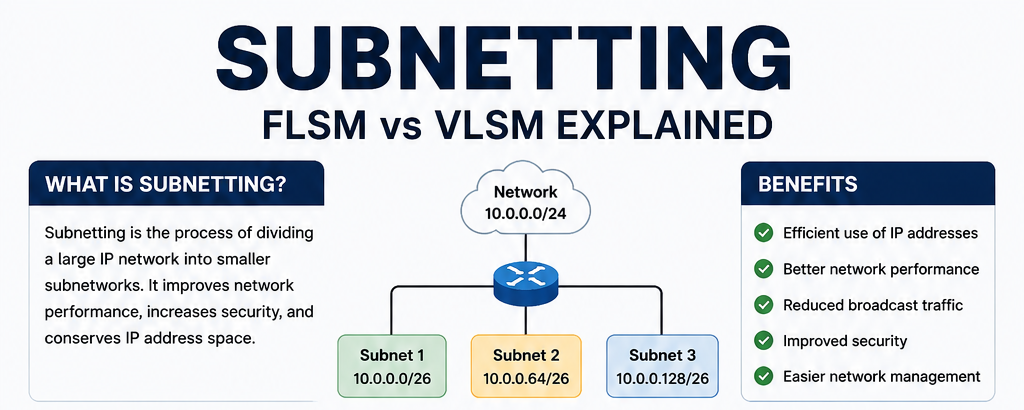
Subnetting क्या है? FLSM और VLSM क्या है
Voice Network में QoS क्यों जरूरी है?
Data network में थोड़ी delay कई applications के लिए बड़ी समस्या नहीं होती। लेकिन voice communication real-time service है।
अगर voice packets बहुत देर से पहुंचते हैं, तो conversation natural नहीं रहती।
इसीलिए Voice Network में QoS (Quality of Service) बहुत important है।
QoS का उद्देश्य critical traffic को priority देना और network congestion के प्रभाव को कम करना है।
Voice traffic के लिए मुख्य performance parameters हैं:
- Latency
- Jitter
- Packet Loss
- Bandwidth
Latency
Source से destination तक packet पहुंचने में लगने वाला समय latency कहलाता है।
बहुत ज्यादा latency होने पर call में noticeable delay दिखाई देता है।
Jitter
Packets के arrival time में variation को jitter कहा जाता है।
अगर packets irregular timing से पहुंचें, तो voice quality प्रभावित हो सकती है।
Packet Loss
अगर network में कुछ voice packets destination तक नहीं पहुंचते, तो आवाज में gaps या distortion सुनाई दे सकता है।
Bandwidth
Voice traffic के लिए required bandwidth codec और network design पर depend करती है।
Data और Voice को एक ही Network पर कैसे चलाएं?
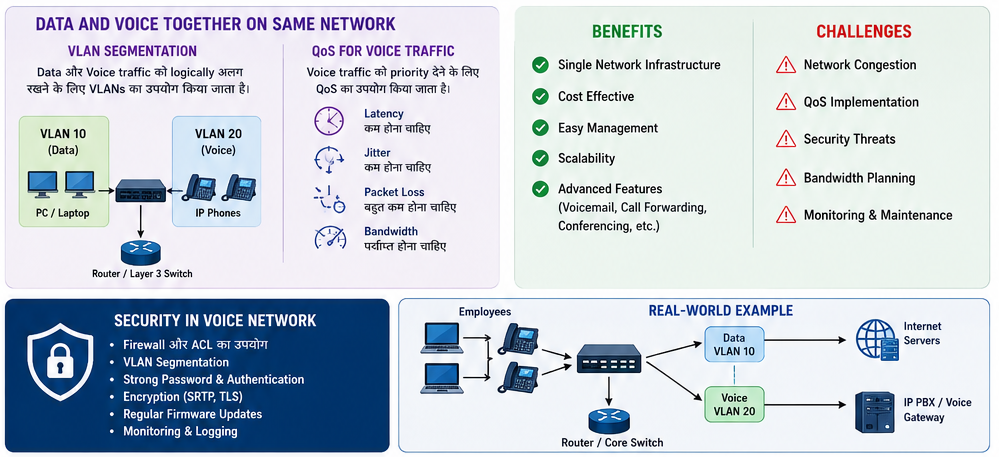
Modern organizations में अक्सर एक ही physical network infrastructure पर data और voice दोनों services चलती हैं।
इस architecture को properly design करने के लिए VLANs का उपयोग किया जा सकता है।
उदाहरण:
VLAN 10 → Data
VLAN 20 → Voice
इस design में computers data VLAN में और IP phones voice VLAN में हो सकते हैं।
इससे traffic को logically अलग करना आसान होता है।
Cisco networking environment में switch ports पर Voice VLAN configure किया जा सकता है।
IP Phone और Computer एक ही Port पर
कुछ enterprise IP phones में built-in switch ports होते हैं। ऐसे setup में एक Ethernet cable switch से IP phone तक जाती है और computer IP phone के दूसरे port से connect हो सकता है।
Conceptually:
Switch → IP Phone → PC
लेकिन network configuration में:
PC → Data VLAN
IP Phone → Voice VLAN
इस तरह physical connection एक हो सकता है, लेकिन logical traffic अलग VLANs में रखा जा सकता है।
Voice Gateway क्या है?
Voice Gateway एक ऐसा device या system है जो अलग voice technologies या networks के बीच communication enable करता है।
उदाहरण के लिए, enterprise IP network को traditional telephone network से connect करने के लिए voice gateway का उपयोग किया जा सकता है।
यह organization को legacy telephone infrastructure और modern IP-based communication के बीच integration करने में मदद करता है।
Data and Voice Network Security
Voice network को भी security की आवश्यकता होती है।
अगर VoIP infrastructure properly secured नहीं है, तो unauthorized users communication systems का misuse कर सकते हैं।
Security के लिए कई techniques इस्तेमाल की जाती हैं:
- Firewall
- Access Control Lists
- VLAN Segmentation
- Network Authentication
- Encryption
- Secure SIP
- Monitoring
- Strong Password Policies
- Regular Firmware Updates
Voice traffic और management traffic को properly segment करना network security के लिए useful approach है।
Data and Voice Network के फायदे
जब data और voice services IP infrastructure पर integrate की जाती हैं, तो organizations को कई advantages मिल सकते हैं।
1. Single Network Infrastructure
एक common IP infrastructure पर multiple services operate की जा सकती हैं।
2. Cost Efficiency
कुछ scenarios में अलग-अलग network infrastructures maintain करने की आवश्यकता कम हो सकती है।
3. Easy Management
IP-based infrastructure को centralized network management tools से monitor किया जा सकता है।
4. Scalability
नए users और IP phones को network में comparatively आसानी से add किया जा सकता है।
5. Advanced Features
Modern IP telephony में features जैसे voicemail, call forwarding, conferencing, softphones और unified communications उपलब्ध हो सकते हैं।
Data and Voice Network की Challenges
इसके साथ कुछ challenges भी होते हैं।
सबसे बड़ा challenge network performance है। अगर data traffic के कारण network congestion बहुत ज्यादा हो जाए, तो voice quality प्रभावित हो सकती है।
इसलिए proper:
- Network Planning
- QoS
- VLAN Design
- Bandwidth Planning
- Redundancy
- Monitoring
की आवश्यकता होती है।
इसके अलावा VoIP systems को cyber security threats से भी protect करना पड़ता है।
Data and Voice Networks का Real-World Example
मान लीजिए किसी company में 100 employees हैं।
हर employee के पास computer और IP phone है।
Network design कुछ इस तरह हो सकता है:
PC → Data VLAN
IP Phone → Voice VLAN
दोनों traffic access switch तक पहुंचता है। Switch से traffic distribution/core network और फिर आवश्यकतानुसार routers, firewalls या servers तक जाता है।
Voice traffic को QoS के माध्यम से priority दी जा सकती है ताकि heavy data transfer के दौरान भी calls की quality acceptable बनी रहे।
यह architecture modern offices, call centers, educational institutions, hospitals और large enterprises में common networking concepts पर आधारित है।
अंतिमतः Data Network और Voice Network के लिया गया निर्णय
Data Network और Voice Network modern communication infrastructure के दो महत्वपूर्ण हिस्से हैं। Traditional networks में voice और data के लिए अलग technologies इस्तेमाल होती थीं, लेकिन IP networking ने दोनों को एक common infrastructure पर operate करना संभव बनाया है।
Data network का primary purpose digital data को transport करना है, जबकि voice network voice communication को support करता है। Modern VoIP environments में voice भी IP packets के रूप में network पर travel करती है।
एक अच्छी Data and Voice Network design के लिए सिर्फ switches और routers लगाना पर्याप्त नहीं है। VLAN segmentation, IP addressing, QoS, bandwidth planning, security और monitoring जैसे concepts को भी सही तरीके से implement करना जरूरी है।
Networking सीखने वाले students और network engineers के लिए Data, Voice, VoIP, VLAN, QoS, SIP और RTP को साथ में समझना काफी महत्वपूर्ण है, क्योंकि यही concepts modern enterprise communication networks की foundation को समझने में मदद करते हैं।
Network & Technology Information
अगर आप Networking, CCNA, CCNP, CCTV Networking, Router, Switch, Wi-Fi, Computer Hardware और IT Infrastructure से जुड़ी practical और technical जानकारी चाहते हैं, तो Network Tech Hub पर ऐसे और technical articles और diagrams पढ़ सकते हैं।
Network Tech Hub — Learn Networking, Understand Technology, Build Better Networks.